In mathematics, continuity describes how smoothly a function behaves without sudden jumps, breaks, or holes. It is an important unit of Calculus as it forms the base, and it helps us further to prove whether a function is differentiable or not.
Checking the continuity of a function is easy! The simple rule for checking is tracing your pen on the curve. If you have to pick up your pen, the function is discontinuous. We’ll review types of discontinuity and how to use limits to identify continuity at a point or over an interval.
We begin our investigation of continuity by exploring what it means for a function to have continuity at a point. Intuitively, a function is continuous at a particular point if there is no break in its graph at that point.
Functions won’t be continuous where we have things like division by zero or logarithms of zero. Let’s take a quick look at an example of determining where a function is not continuous. A nice consequence of continuity is the following fact.
How do you findifafunctioniscontinuous? To determine if a function is continuous at a point c, you need to check three conditions: The function is defined at c: f (c) exists. The limit exists at c: lim x → c f (x) exists. The limit equals the function value: lim x → c f (x) = f (c).
For a function to be continuous at a point x = a, it must meet the following criteria: f (a) must be defined. Note that the above tests the continuity of a single point. For a function to be continuous over its entire domain, the above must be true for every point within the domain of the function. Determine whether is continuous at x = 3. 1.
In simpler terms, you could draw the graph of a continuousfunction without lifting your pen from the paper. Let’s dive into the formal definition. A function f (x) is continuous at a point x=a if three essential conditions are met: The Function is Defined at the Point: f (a) exists.
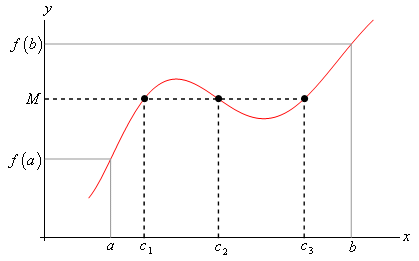 Functions won’t be continuous where we have things like division by zero or logarithms of zero. Let’s take a quick look at an example of determining where a function is not continuous. A nice consequence of continuity is the following fact.